
I Grew Up in Church But Left — Is It Weird to Go Back?
- Mar 27
- 9 min read
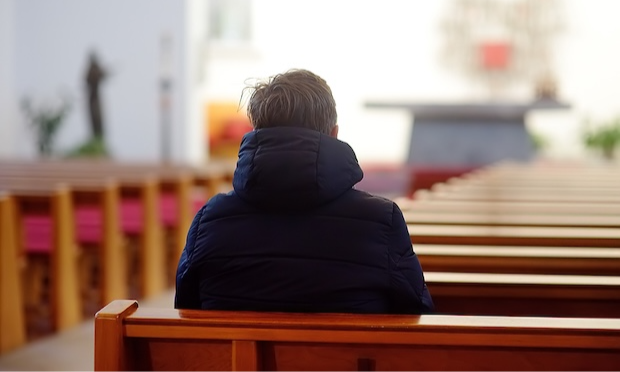
No. It's not weird. And the fact that you're asking the question matters more than you might think.
If you grew up in church and walked away at some point — in college, in your twenties, after something painful, or just gradually without a clear moment you could point to — you're in remarkably common company. Research from Pew and Barna consistently shows that the majority of people who leave church do so before age 30, and that a significant number of them spend years — sometimes decades — with a low-grade pull toward something they can't quite name.
That pull is what brought you here. And it's worth taking seriously.
Why people leave in the first place
It's worth naming this honestly, because the reason you left usually says something about what you're afraid you'll walk back into.
Some people left because they got hurt. A church community that promised belonging delivered judgment instead. A pastor they trusted let them down. They went through something hard — a divorce, a doubt, a moral failure of their own or someone else's — and the church either didn't show up or made things worse. That wound doesn't just disappear because time has passed. And it shouldn't be minimized.
Some people left because their questions had nowhere to go. They hit a season of genuine intellectual doubt — about God, about the Bible, about whether any of it was actually true — and the response they got was "just have faith" or, worse, silence. A place that can't hold your questions isn't a place you can be honest in. So they stopped coming. Side note - a good church shouldn't be afraid of honest questions. Christianity and the Bible have 2,000 years worth of scrutiny and comes out with honest but strong answers to some difficult questions.
Some people left because life crowded it out. The move. The new job. The kids. The schedule. Besides, it's really hard to find a church if you've moved to a new place. There was no dramatic exit — just a slow fade until church was something they used to do, like calling home every Sunday or running in the mornings. The habit broke and nobody came looking, and eventually it stopped feeling like something that belonged to their life anymore. There's no judgement here. We get it. In fact, studies show that millions of people had a similar experience.
Some people left because they were never really there to begin with. They grew up attending, going through the motions, saying the right things — but their faith never became genuinely their own. At some point the external reasons to show up ran out, and there was nothing internal holding them.
All of these are real. None of them disqualify you from going back.
The thing about nobody coming to find you
Here's something a lot of people who drift away from church carry quietly, sometimes without even naming it: the ache of not being pursued.
The habit broke. The weeks turned into months. Nobody called. Nobody noticed, or if they noticed, they didn't say anything. And somewhere underneath the drift was a question that never quite got asked out loud: Did it matter that I was there? Does it matter that I'm gone?
That's a real wound. And Jesus, of all things, addressed it directly.
In Luke 15, he tells three stories back to back — the lost sheep, the lost coin, the lost son. They're usually read separately, but together they make a single point with almost uncomfortable repetition: when something precious is lost, the one who loves it doesn't shrug and move on. It leaves the ninety-nine to find the one. It sweeps the whole house. It runs down the road.
The shepherd in that first story doesn't wait for the sheep to find its own way back. He goes looking. He carries it home on his shoulders. And then — and this is the detail that keeps striking me — he throws a party.
If you left church and nobody came looking, that failure belongs to the people and institutions who should have come. It doesn't belong to the story Jesus was telling about how God responds to the one who wanders.
What makes going back feel so hard
Even when something is pulling you toward the door, there are real reasons it can feel impossible to walk through it.
The "prodigal" feeling.
If you grew up in church, you know the story of the prodigal son — the one who demanded his inheritance early, spent everything, and ended up in a pigsty before coming to his senses and deciding to go home. A lot of people who've been away from church for years carry a version of that feeling. Like they squandered something. Like they have to arrive with an explanation, a cleaned-up life, a convincing argument for why they deserve to be let back in.
The theologian Henri Nouwen spent years meditating on Rembrandt's painting of the prodigal's return and wrote about it in The Return of the Prodigal Son — one of the most honest and beautiful books about coming home to faith ever written. What stopped him, he said, was the same thing that stops most of us: the assumption that we have to earn the welcome. That the father is waiting at the door with crossed arms and an accounting ledger.
But that's not the father in the story. The father in the story saw his son "while he was still a great way off" — which means he'd been watching the road. He ran. He didn't wait for the apology to be finished. He interrupted it with a robe and a ring and a feast.
Tim Keller, in The Prodigal God, points out something that most readers miss: the father in that story behaves in a way that would have been considered humiliating for a man of his standing in that culture. Running was undignified. The embrace was extravagant. The party was excessive. The father, says Keller, was willing to lose his dignity in order to publicly restore his son's.
That's the picture Jesus was painting of God's response to someone who comes home. Not a slow, reluctant welcome. A sprint.
The gap in knowledge.
If you've been away for ten or fifteen years, walking back into a church can feel like rejoining a conversation that's been going on without you. People seem to know things. They reference passages easily, they use shorthand you've half-forgotten, they sing words from memory. It's easy to feel like you've fallen behind and everyone will notice.
What's worth knowing: a lot of people in those seats feel the same way, even if they never left. Knowledge of the Bible is less universal among churchgoers than it looks from the outside. And nobody in a healthy congregation is keeping score.
The fear that you've changed too much.
Maybe you hold different views than you did at seventeen. Maybe you've been through things that don't fit neatly into the world of your childhood church. Maybe you're not sure you believe what you used to believe — or what you're supposed to believe. Maybe your life has gone in directions that feel difficult to bring through that door.
Here's what's actually true: the people sitting in those seats have stories too. Complicated ones. The church, at its best, is not a museum of perfect people — it's a community of broken ones who've found something worth orienting their lives around, and who are still very much in process.
God is working in all our lives. He's inviting us to trust him. Belief and faith are trust, but it's not blind. There are good reasons for believing the Bible and Christianity. In fact, some philosophers have converted to Christianity because they realized it took more faith not to believe than to believe.
On coming back to a faith that might look different now
C.S. Lewis, writing to an American woman named Mary Willis Shelburne over many years of correspondence, described his own faith as something that had to be re-won regularly — not a static possession but a living thing that required ongoing engagement. That surprised a lot of people who assumed that Lewis, of all people, had figured it out.
The faith you come back to at thirty-five is not going to look exactly like the faith you had at fifteen. It shouldn't. A faith that has been tested, questioned, weathered some real life, and come back to the table is almost always more durable than one that was never challenged. It can actually be richer, deeper, and more mature.
The doubt you carried during your years away might have done more for your honest understanding of what you actually believe than a decade of comfortable, unexamined Sunday attendance ever would have.
Coming back doesn't mean pretending the years away didn't happen. It means bringing all of it with you — the questions, the experiences, the things that shifted — and seeing what the faith has to say to the person you actually are now. Not the person you were at confirmation, or at your parents' kitchen table, or in a youth group years ago.
That conversation is usually more interesting than people expect.
A word for those who were genuinely hurt
If your reason for leaving involved real damage — abuse of authority, a community that failed you catastrophically, spiritual manipulation, or a season where the church made the worst moments of your life worse — going back deserves more care than this article can fully give.
You don't owe your return to the place that hurt you. There are other communities. There are churches that have learned — sometimes through their own painful reckonings — how to handle broken people with more grace than you received.
What's also worth remembering: the failures of a person, a pastor, or an institution are not the final word on the Christian faith itself. The church is made up of imperfect people, and imperfect people cause real harm. That's not an excuse. But a wound inflicted by someone who claimed to represent God is not a wound inflicted by God — and the distance between those two things is worth exploring, when you're ready.
If a church hurt you, that hurt is real, and it deserved better than what it got. And if you're ever open to exploring what the faith looks like outside the context of the place that wounded you — there are communities that will handle your history with the care it deserved the first time.
Going back doesn't have to be a declaration
Here's one more thing worth saying: returning to church doesn't have to be a dramatic recommitment. It doesn't require you to resolve all your questions, sign anything, or announce that you're back.
It can just mean showing up on a Sunday to see what's there.
You're allowed to walk in as an observer. To sit quietly and listen. To take what's useful and think carefully about the rest. To leave afterward without any announcements or decisions. To come back once more, or not.
For most people who find their way back to faith, there wasn't a single moment — there was a series of small steps. Showing up once. Coming back again. A conversation that went somewhere unexpected. A passage that landed differently than it would have ten years ago. A community that turned out to be more honest and more human than they expected. It's a journey. God at times will use all the seemingly random events to weave you back into this beautiful tapestry called the church - a mixture of real people with diverse backgrounds and stories.
That's usually how it works. The door is open. You don't have to run through it. You just have to walk through it.
You'd be welcome here
If you're in the Fort Mill area — or in Tega Cay, Indian Land, Baxter Village, or anywhere in York County — and something is pulling you back toward a church door, we'd genuinely love for that door to be ours.
One Hope Community Church meets Sunday mornings at the Baxter-Close YMCA in Baxter Village. We're not a polished production. We're a community of regular people — some with long church histories, some with complicated ones, some with none — trying to take the Christian faith seriously and live it honestly together.
Our Sunday services are built around expository preaching — working through books of the Bible, honestly, with attention to the hard parts as well as the good ones. We have no dress code, no pressure, and no expectation that you'll arrive with things figured out.
If something is pulling you back — we think that pull is worth paying attention to. We'd be honored to be part of wherever it leads.
Sundays at 10:30 am | Baxter YMCA, 857 Promenade Walk, Fort Mill, SC 29708
One Hope Community Church is a gospel-centered church in Fort Mill, SC, serving the Baxter Village, Tega Cay, Indian Land, and greater York County area. We exist to help people find real faith and real community — wherever they're starting from.


